Gold
Panning for beginners - How to start - Tips & Tricks
Hoping to strike it rich by gold panning? It’s not as simple as you might think, but it’s possible! If you want to increase your chances of finding gold, consider these tips and tricks for finding it in small scale mining equipment like gold pans and sluices.
What is
Gold Panning?
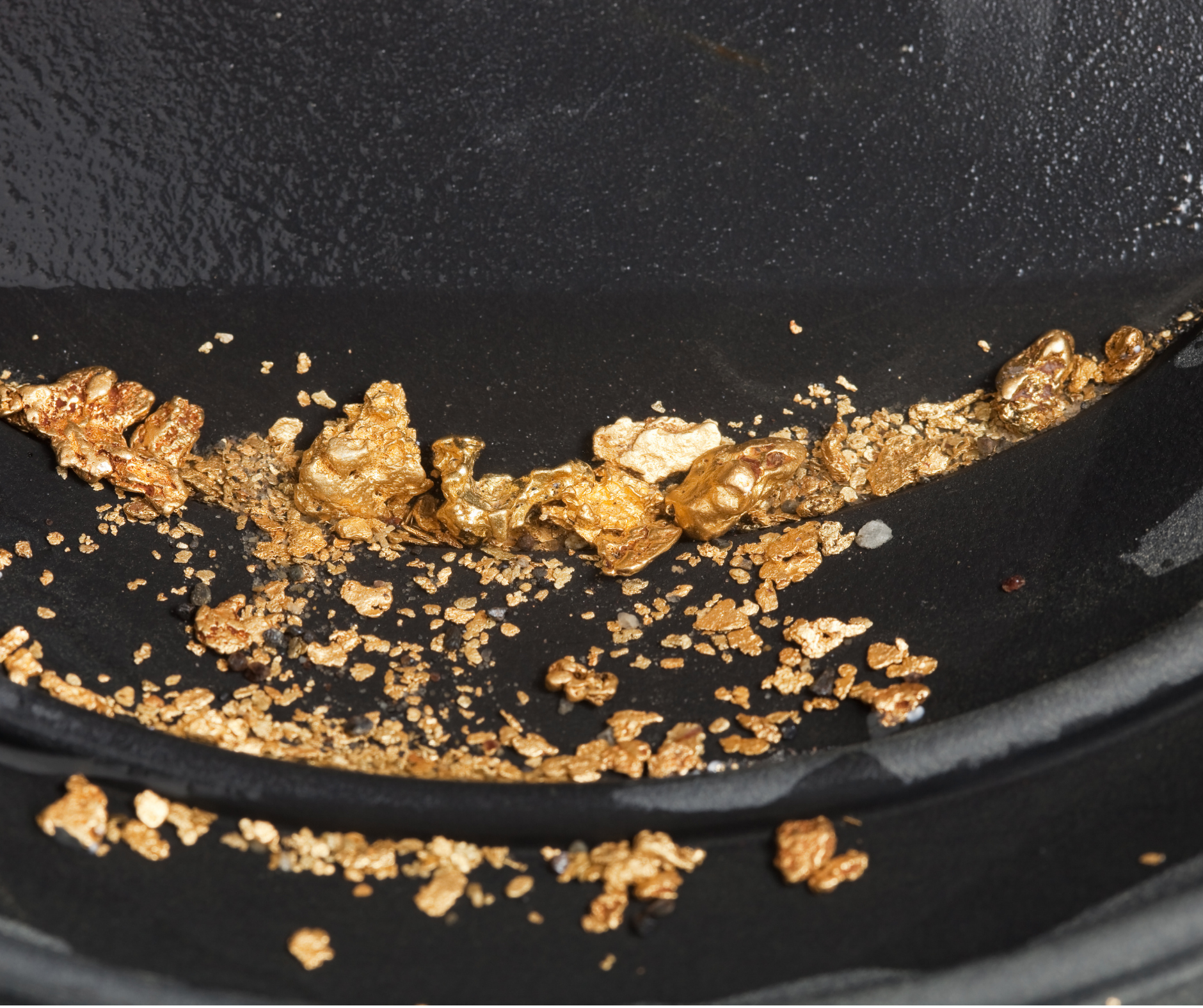
Gold panning is a hobby that people can enjoy with little more than a gold pan, some water, a favourite metal detector and dreams of finding gold. Unfortunately, finding actual gold is not always an easy task. So, what is gold panning? Gold panning is simply washing dirt in water to see if there are any flakes of pure gold within it. The use of sluice boxes, pumps and chemicals make all aspects of small-scale mining easier. Normally one would classify material (more on classifying later) into finer material. This material or concentrates, would then be panned by rinsing the dirt out of the pan in a circular motion. The heavier material and gold will lay at the bottom of the pan.
Everything
you need to get started
Gold panning is a hobby that is easy to get into—all you need is a pan and some water. But to find real gold, you’ll need a few pieces of equipment to help enhance your chances. Basic items to get you started would be: gold pan, shovel, classifying pans or mesh boxes and some water. If you want to increase your chances of finding gold, you should consider investing in a sluice box or highbanker sluice. A sluice box or highbanker sluice is used to run more material catching all of your concentrates in a gold mat. These concentrates are then washed out into a bucket and then panned.
How much
does it cost?
Gold panning is fairly inexpensive, and all you need is a gold pan and basic tools. Once you really get into prospecting for gold you would want to invest in some more equipment. The cost of equipment can quickly start to add up. Basic sluice boxes can also easily be made and if you use a river sluice box, you won’t need a water pump which can reduce the cost. More experienced prospectors would normally purchase a highbanker sluice which can cost anything from R10 000.00 up to R50 000.00 for larger systems. If we considering staying with gold panning only, the cost is fairly low with gold pans ranging in price from R100 up to R500 for larger pans. Classifying pans also range from the R150 mark up to R500.00 a classifying pan. Still, with basic tools, you could still be well under R2000.00 to start panning for gold.
Where to
find gold?
First of all, panning for gold is not allowed in all countries and provinces so it is advised that you make sure of what is allowed in your country. It is also very important to do some research of the areas you suspect might have gold deposits and for the purposes of this post, we will assume you will be panning for gold in a river somewhere hoping to find alluvial gold. Alluvial deposits are pieces of gold that have been washed away by the force of water, and have been deposited in sediment in river banks, river beds etc. It is a good idea to do some research on where alluvial gold or gold in general lies in river beds. This will drastically increase your chances of finding gold while panning.
What
tools do I need?
You’ll need a gold pan, of course, but there are also specialized tools that will make your panning experience more efficient. For instance, if you want to maximize your profits by recovering every last gold dust from that gold-bearing mud, you’ll want to use a small-scale mining sluice box. The standard size for a sluice box is about 300mm wide by roughly 1 meter long, but you can buy smaller or larger boxes depending on how much room you have available. Again, if you are prospecting in a river, you might want to consider purchasing a river sluice box to take advantage of running water. Positioning your sluice box to adjust your flow and running classified material through your sluice and panning out the concentrates caught in your gold mat. If just starting out, make sure you have at least two size gold pans, a 14" inch and 10”-inch gold pan works great. A large 20L drum to either carry material in that would be classified or to rinse classified material into, a spade/shovel, classifying pans or mesh boxes and of course water. Either running water from the river, or water in another 20L bucket you can use to pan with. This is where the 10”-inch pan comes in handy. It fits perfectly inside a 20L bucket if access to water is difficult. Once you get the hang of things, or would like to start processing more material, you can look into investing in more small-scale mining equipment.
Ways to
remove the gold from your pan/bucket/sluice box.
Once you have removed most material from your gold pan you would most likely end up with some black sand with your fine gold. Any nuggets or large flakes you can remove and put into a glass jar/vile. Usually, black sand is magnetic and using a magnet will get rid of most of the black sand from your pan. The finer gold material you can suck up using a gold snuffer bottle. This is then added to your glass jar. If you are using a sluice box or highbanker sluice, the heavier material will get stuck or "concentrate" into your sluice matting, miners moss or whatever gold mat you are using. Once you have run a sufficient amount of material through your sluice box, you would then gently remove your gold mat, and rinse it out in either a bucket, or into a larger gold pan. We call this your concentrates. The concentrates are then panned out, or if you do not want to pan out this material, you can run your concentrates through a smaller clean-up sluice with a finer gold mat or vortex mat which is a popular choice. Once you have panned out or separated the gold from the other material, you would again use your snuffer bottle to collect the gold and place it into your glass jar with the rest of your gold.
Final
Thoughts
Gold panning is a good first step into small scale mining.
It is also fun, easy and cost effective. Before you rush out and purchase one
of those fancy gold pans you need to know exactly what you will be using it for
and what minerals you are looking for. Information is key, make sure to do your
research, not only on gold prospecting equipment but also the laws of
prospecting for gold. Research areas on where to find gold, where gold lies,
how to identify pyrite or fool's gold (iron sulphide) which can easily be mistaken
for the real deal. Most importantly, have fun. Join forums and watch loads of YouTube
videos that will provide you with an abundance of information. I hope this
helps you to get started!